
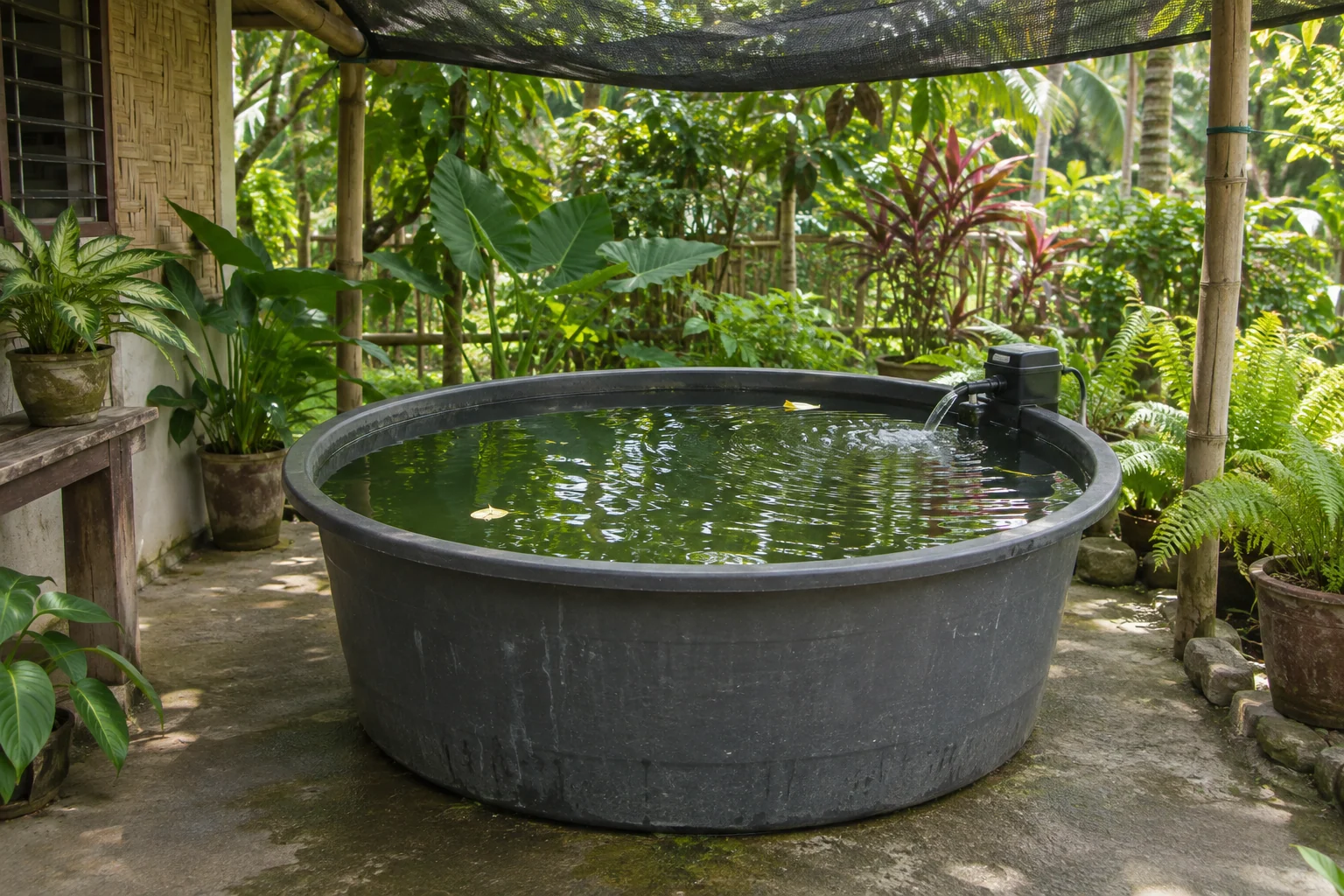
Measure the location first
Outdoor systems can offer natural light and seasonal interest, but the water experiences its own microclimate. A container beside a wall may become much warmer than shaded air. Measure water temperature through the day and overnight before deciding which animals can live there.
Emeraldking documents seasonal outdoor livebearer keeping in the Netherlands. Those observations are valuable context, not a ready-made schedule for Mindoro. Local sun, rainfall, storm exposure and the specific stock must determine the setup.
Plan for the difficult day
Provide a safe source of shade and reliable aeration or circulation appropriate to the stock. Warm water holds less dissolved oxygen, while animals and microbes continue using it. Plants and algae do not guarantee oxygen through the night or during prolonged cloudy weather.
Use suitable containers, stable supports and protected electrical connections. Screen overflows so fish, shrimp and eggs cannot escape during heavy rain. Prevent runoff from roofs, roads, pesticides or garden treatments from entering. A sudden dilution after rain can alter water chemistry as well as temperature.
- Shade
- Check where shade falls at the warmest part of the day.
- Circulation
- Check aeration and water movement when conditions change.
- Indoor fallback
- Keep a place ready if outdoor conditions become unsafe.
Keep an indoor fallback
Have a practical route for moving stock if overheating, storms, contamination or equipment failure makes the system unsafe. Monitor water quality and feeding instead of assuming a natural-looking tub regulates itself. Cover against predators where needed, while preserving ventilation and access.
Never release aquarium animals or plants into drains, rivers or ponds connected to natural waterways. An apparently harmless escape can establish non-native populations. Responsible outdoor keeping includes containment from the beginning, not only when the weather forecast becomes unpleasant.
- Record minimum and maximum water temperatures.
- Protect against heat, runoff and overflow.
- Keep emergency aeration and relocation capacity.
- Inspect after heavy rain.
Sources & further reading
- Emeraldking Aquatics — Outdoors ↗
- UF/IFAS — Dissolved Oxygen for Fish Production ↗
- UF/IFAS — Aquatic Plants and Water Management ↗
Our own explanations, informed by the references above. Husbandry needs vary with the species, line and aquarium.