
Peaceful does not mean baby-safe
A fish can ignore adult shrimp yet eat newly hatched young. Guppies, neon tetras, danios and mollies should not be presented as guaranteed safe companions for a breeding colony. Dense cover offers refuge but does not remove the risk.
Otocinclus are often kept with dwarf shrimp because of their grazing habits, but their own needs still matter: an established aquarium, suitable food and appropriate group housing. Small Corydoras also need their own feeding and space. Choose a combination that meets every species' requirements, not merely one that fits physically inside the tank.
Before the bag is opened
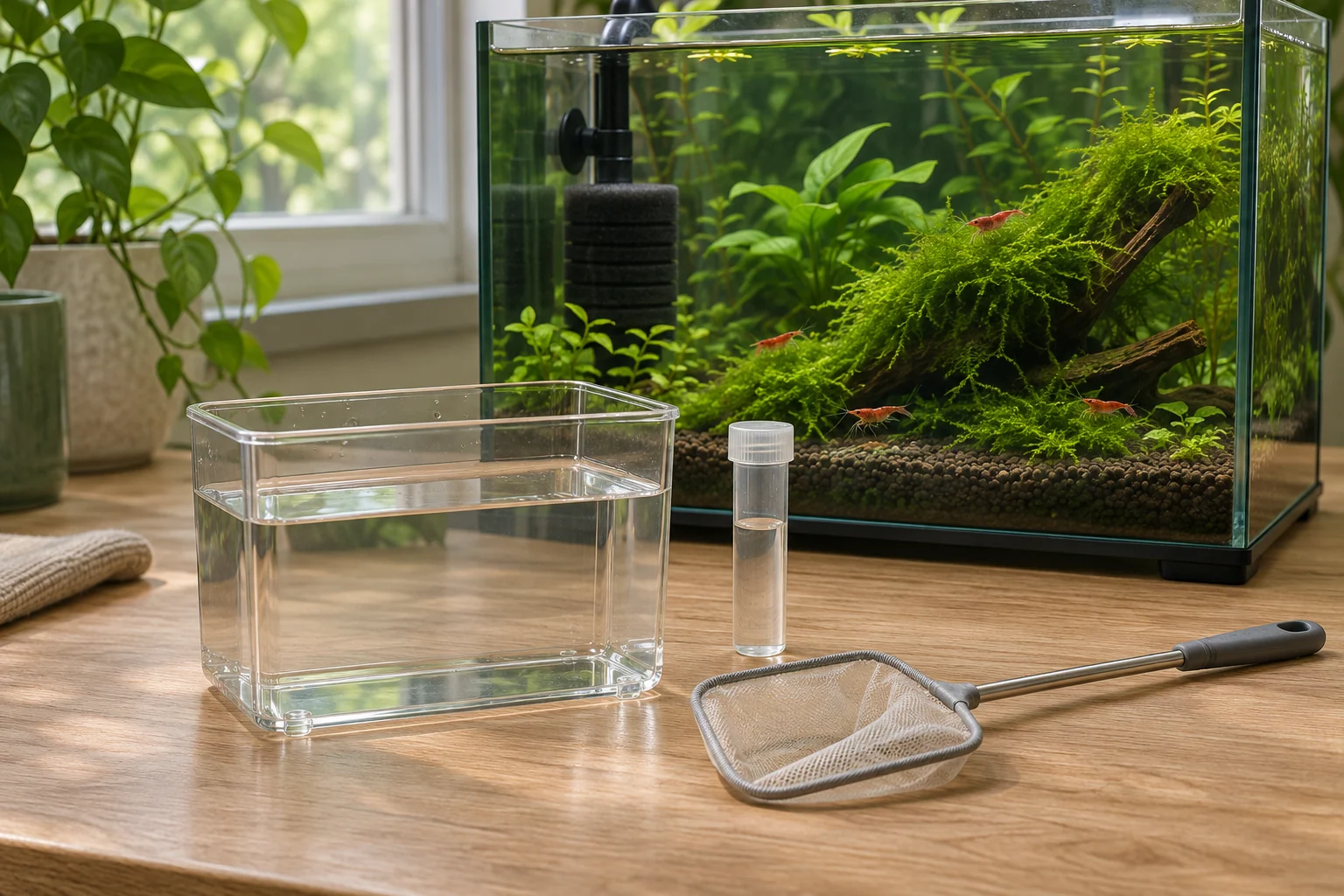
Confirm the aquarium is established and compare its temperature and water tests with the breeder's conditions. Prepare a clean dedicated container, a protected filter intake and subdued lighting. Read any shipment-specific arrival instructions in advance, especially after a long journey.
For a routine local transfer, introduce aquarium water gradually using a controlled method while keeping the container temperature stable. Base the transition on the actual difference between the two waters rather than treating one fixed timer as correct for every delivery. Transfer the animals gently without pouring transport water into the aquarium.
Give observation a quiet place
Note the arrival date and count, then let the shrimp settle. Some initial hiding or reduced colour can follow transport. Repeated loss of balance, frantic activity or several motionless animals warrants prompt water checks and contact with the breeder.
Keep a separate observation setup for new animals when maintaining valuable breeding lines. Record which aquarium received each group. This makes later questions about behaviour, colour or losses much easier to answer than introducing several new groups and changing the feeding routine on the same day.
Sources & further reading
- Aquarium Co-Op: Tank mates for cherry shrimp ↗
- Rare Shrimps Canada: Acclimating Neocaridina ↗
- OATA: Introducing freshwater shrimp ↗
Our own explanations, informed by the references above. Husbandry needs vary with the species, line and aquarium.