More than visible algae
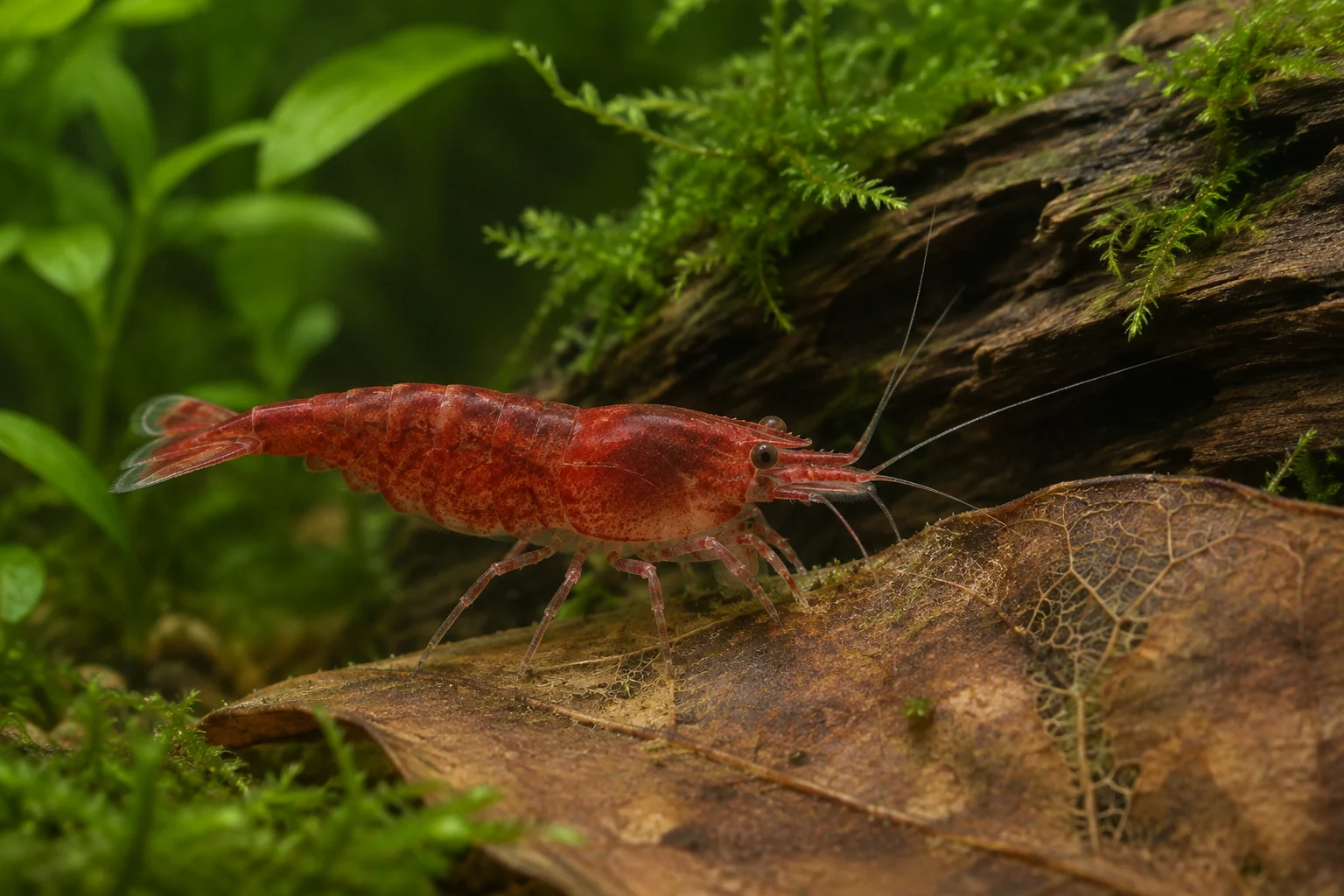
Biofilm is a community of microscopic organisms on submerged surfaces. Shrimp browse across it throughout the day. In a controlled study, Neocaridina davidi completed their life cycle in a biofilm-based system; the researchers described communities containing microalgae, diatoms, cyanobacteria and ciliates.
That result demonstrates the value of established grazing surfaces. It does not prove that every glass-clean home aquarium supplies enough food, or that a keeper should copy the study's zero-water-exchange design. A small new colony and a dense breeding population have different demands.
Use food deliberately
Choose a suitable complete shrimp food as a measured supplement to natural grazing. Begin with a small amount and observe access and leftovers before increasing it. A feeding dish can make this comparison easier. Avoid treating shrimp as a solution for unlimited uneaten fish food.
Diet can also influence visible colour. A 90-day feeding study found stronger pigmentation with the tested diet highest in carotenoids. That is evidence about colour expression under those conditions, not proof that a food changes a shrimp's inherited colour line or guarantees the same response in every morph.
Observe the smallest mouths
Watch several parts of the aquarium, not only the adults crowding one pellet. Young shrimp need access to food close to their cover. Mature moss and other established surfaces distribute grazing opportunities across the tank.
Keep a simple feeding record: food, amount, response and leftovers. Reduce the next portion when food accumulates, and investigate a sudden loss of appetite alongside water tests. Add botanicals gradually and use aquarium-appropriate material from a known source. The aim is steady access to food with a manageable organic load.
Sources & further reading
- Viau et al., 2020: Neocaridina life cycle in a biofilm-based culture system ↗
- Tomas et al., 2020: Diet, carotenoids and body coloration in Neocaridina davidi ↗
- OATA: Feeding and waste management for freshwater shrimp ↗
- Dennerle: Dwarf shrimp feeding ↗
Our own explanations, informed by the references above. Husbandry needs vary with the species, line and aquarium.