
Start with the environment
Rapid breathing, loss of appetite, clamped fins, rubbing and unusual swimming are signs to investigate, not a complete diagnosis. Similar signs can come from poor water, parasites, infections or physical stress. Check temperature, aeration, ammonia and nitrite promptly when behaviour changes.
Look for a timeline. Did the problem follow new stock, an outage, a large feed, a water change or a cleaning product used nearby? Good records help a qualified aquatic professional distinguish likely causes. Clear-looking water does not exclude a chemical problem.
Quarantine is a separate system
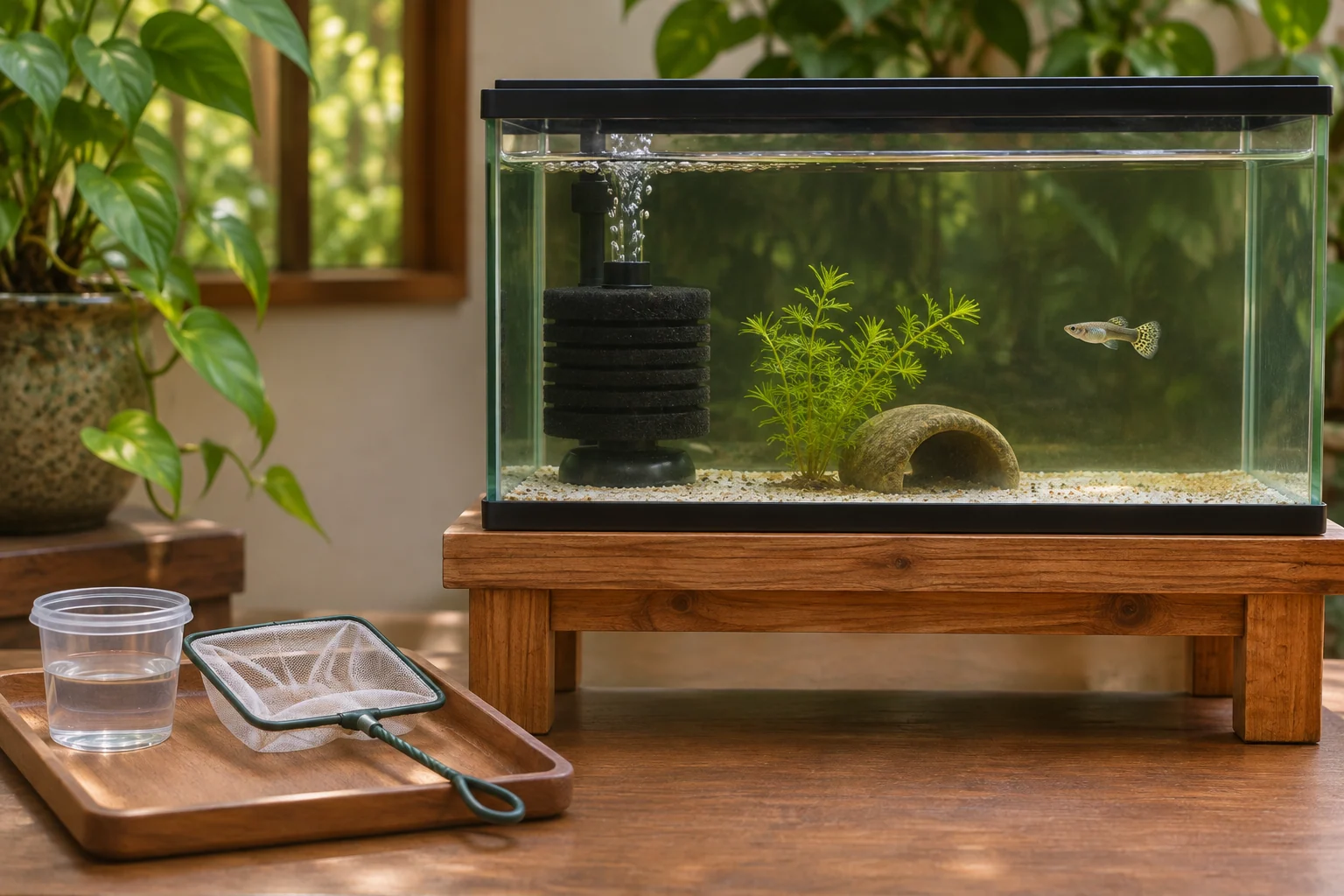
New arrivals should be observed in a prepared, separate aquarium before joining established stock. Separation includes equipment and water transfer, not simply a divider inside the same tank. Provide biological filtration, suitable cover and conditions appropriate to the species.
Quarantine length depends on the animals, their history and the disease risks being assessed. Eating on the first day is encouraging but does not establish that a fish is free of infection. Continue watching appetite, breathing, waste, skin and fins, and keep records of any treatment.
- PrepareSet up a separate aquarium with its own net and siphon.
- ObserveWatch feeding, breathing and swimming and record changes.
- ReviewCheck your observations and water results before combining groups.
Treat an identified problem
When illness persists, progresses or causes deaths, seek an aquatic veterinarian or fish-health specialist. Photos, water results and a timeline are useful; some conditions need microscopy or other diagnostics. Do not stack medications or repeatedly change treatments based only on resemblance to an online photograph.
Follow the product label and professional guidance. Check effects on shrimp, plants and the biological filter. After treatment, continue measuring water quality and documenting recovery. Prevention—suitable stocking, stable conditions, nutrition and careful introductions—is an ongoing practice, not a promise that disease can never occur.
- Test water immediately when several fish change behaviour.
- Keep quarantine tools separate.
- Document symptoms and interventions.
- Avoid diagnosis from colour or one symptom alone.
Sources & further reading
- Emeraldking Aquatics — Fish diseases ↗
- UF/IFAS — Introduction to Fish Health Management ↗
- UF/IFAS — Stress: Its Role in Fish Disease ↗
Our own explanations, informed by the references above. Husbandry needs vary with the species, line and aquarium.