More than an algae solution
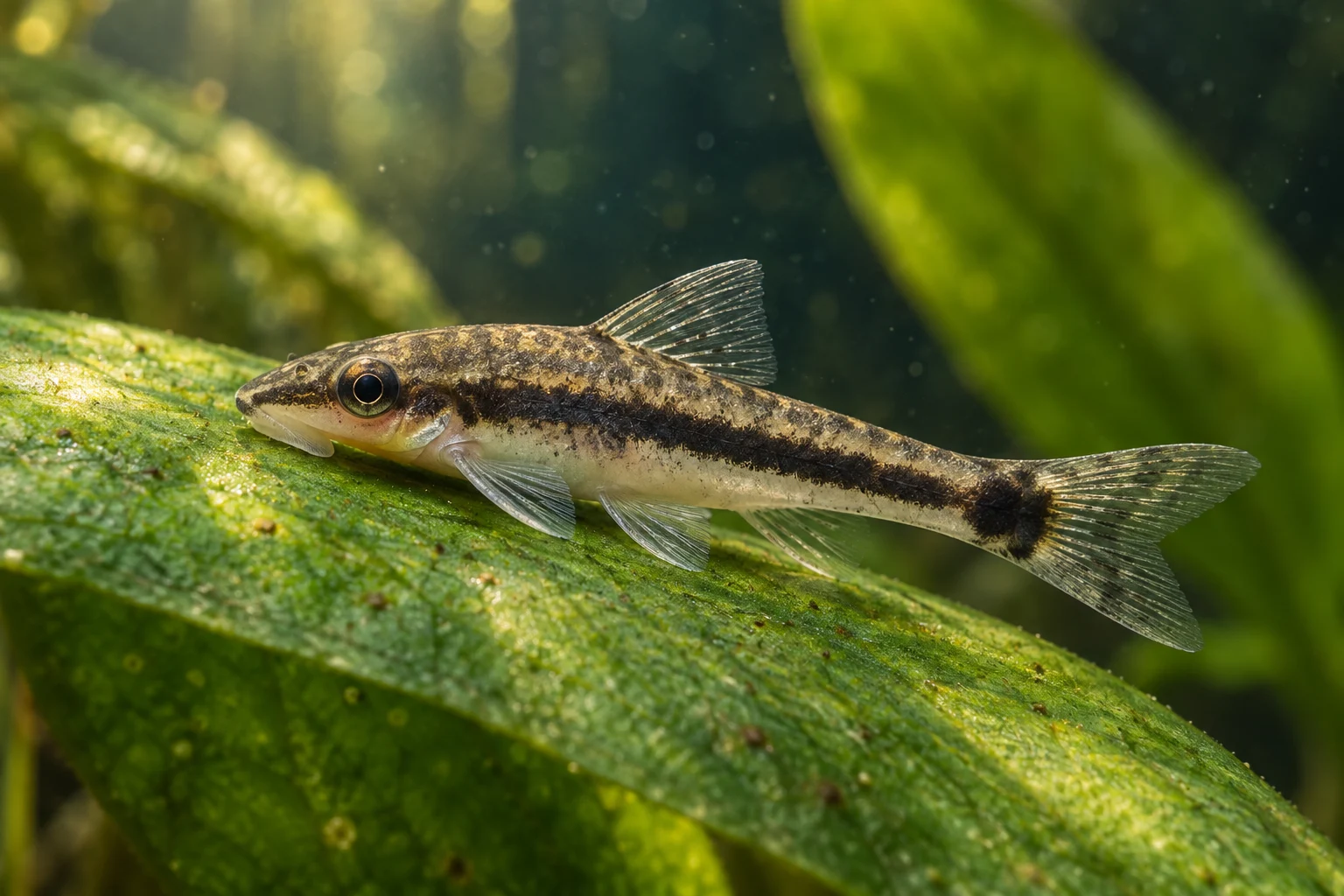
Otocinclus is a genus, not a single species. Several similar-looking species are traded as otos, so this profile keeps the identification at genus level until a particular group is confirmed. Their small size and peaceful presence make them fascinating animals to watch at close range.
Their food supply deserves special attention. A newly set-up aquarium with a little visible algae is not automatically ready to support a group of grazing catfish.
Build a reliable food supply
Provide established surfaces with soft algae and biofilm, and offer appropriate supplementary foods that the fish demonstrably accept. Monitor belly condition rather than assuming that a wafer placed in the tank was eaten. Leaves, wood and planted cover create both resting and foraging areas.
Plan group size around the aquarium’s ability to feed every fish. More grazers can exhaust food faster. Avoid aggressive tankmates and animals that consistently take supplementary food before the otos can reach it.
Before bringing them home
Ask what the current group is eating and how it has settled. Look for active grazing and good body condition. Prepare a mature receiving environment and an observation routine. Otocinclus do not replace maintenance, and they do not eat every kind of algae.
- Confirm species if a precise breeding project is planned.
- Check food intake over several days.
- Treat unexplained weight loss as a reason to investigate promptly.
Sources & further reading
Our own explanations, informed by the references above. Husbandry needs vary with the species, line and aquarium.