
A different beginning
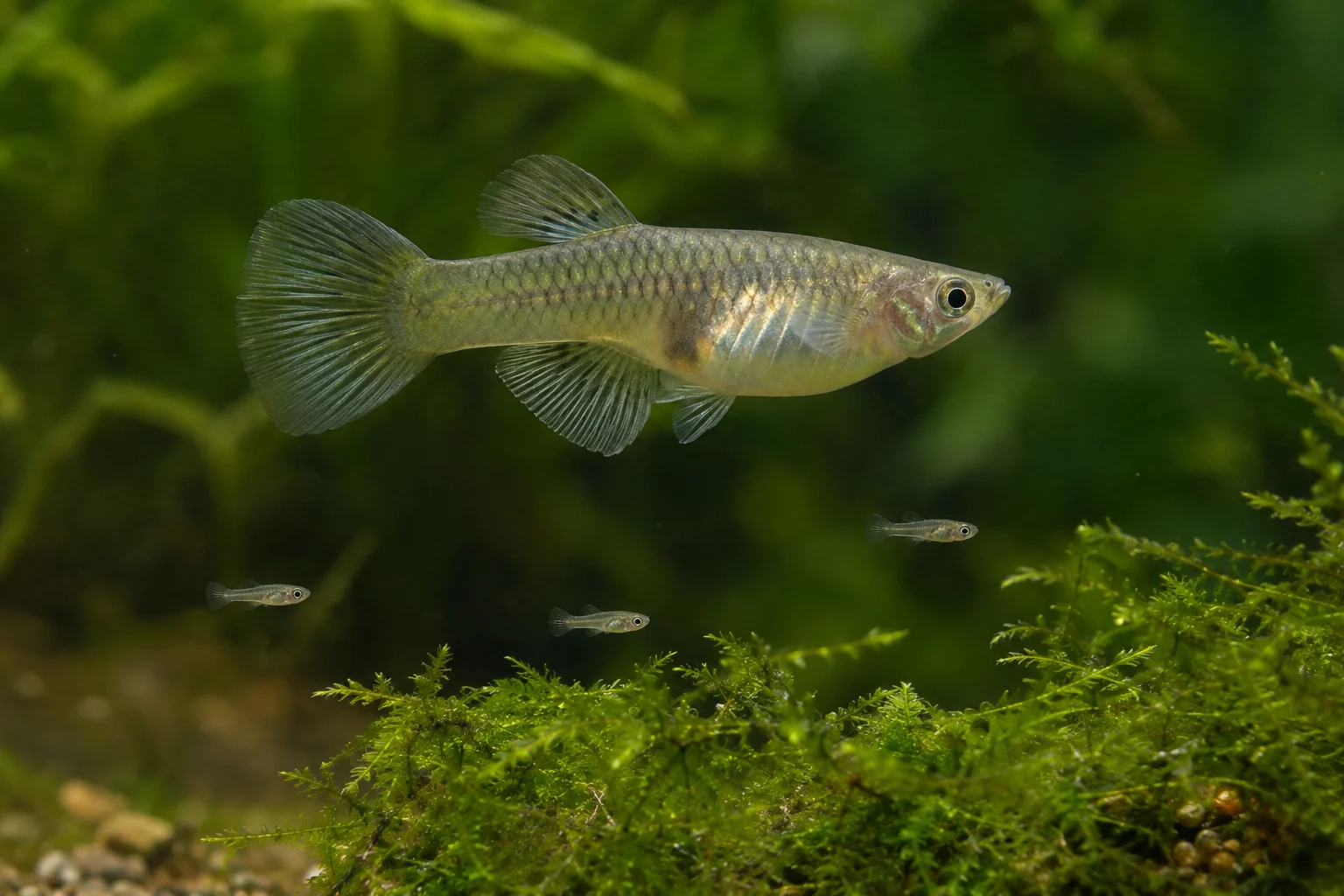
Guppies and familiar aquarium mollies give birth to free-swimming young rather than depositing eggs on plants or substrate. Fertilisation takes place inside the female. In male poeciliid livebearers, the modified anal fin—the gonopodium—is involved in transferring sperm.
Livebearing is a reproductive strategy, not a single care requirement. Different livebearing fishes vary in gestation, brood size, physiology and environmental needs. A statement that works for a common domestic guppy should not automatically be applied to every livebearer.
The sperm-storage surprise
Female guppies can retain sperm for months and produce successive broods after a previous mating. A brood may also have more than one father. This is normal reproductive biology, but it makes casual breeding records unreliable.
A new male is not a reset button. Nor does removing all males guarantee that an established female colony will immediately stop producing fry. Plan stocking and grow-out capacity around this possibility rather than being surprised by repeated births.
Prepare conditions, not a countdown
Guppy development commonly takes roughly a month, but temperature, maternal condition and other factors affect timing. Abdominal shape and a gravid spot can support observation; they do not provide a precise delivery date. Repeatedly chasing a female to inspect her is counterproductive.
Provide secure cover, stable water and a practical way to protect fry. A prepared maternity tank or carefully planned planted colony gives more room than prolonged confinement in a small trap. Remove a fish from persistent harassment and evaluate abnormal swelling or laboured breathing as health concerns rather than assuming pregnancy.
- Prepare the nursery before births begin.
- Record actual birth dates.
- Keep breeding plans within available tank capacity.
Sources & further reading
- Emeraldking Aquatics — Introduction to livebearing toothcarps ↗
- Evans & Magurran — Multiple benefits of multiple mating in guppies ↗
- Gasparini et al. — Sperm storage and reproductive fitness ↗
Our own explanations, informed by the references above. Husbandry needs vary with the species, line and aquarium.